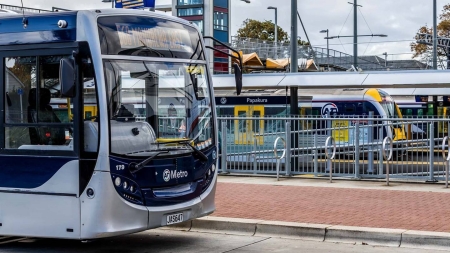
A new central Hamilton railway station and hourly trains to Auckland are at the heart of a bold plan to transform Te Huia – but the price tag could run into hundreds of millions of dollars.
A new Waikato Regional Council report recommends a major expansion of the passenger rail service over time, including four new stations, battery-electric trains and a central Hamilton terminus.
The proposed overhaul comes with an estimated capital cost of more than half a billion dollars, while running the service would cost $50m a year by 2033.
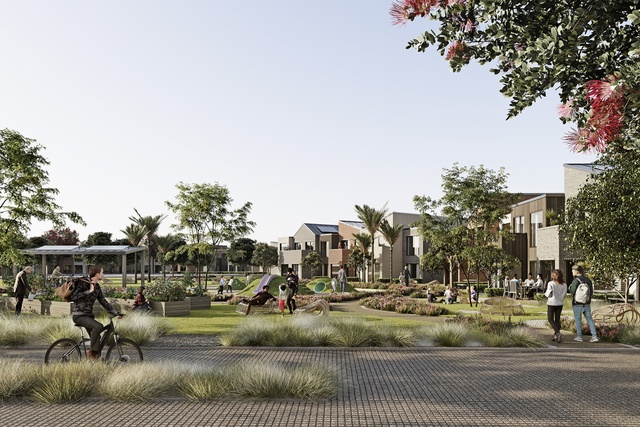
The report, due to be discussed by the council's Transport Committee on Tuesday, identifies a new above-ground station between Seddon Rd and Tristram St as a critical part of the plan.
It would replace Frankton as the Hamilton terminus, bringing passengers closer to the central city's workplaces, shops, schools and entertainment.
“A central station would improve access to employment, education, civic, retail and leisure destinations and provide a stronger interchange with Hamilton buses, walking and cycling,’’ the report says.
“The demand assessment indicates that central Hamilton access contributes strongly to overall patronage, while terminating at Frankton materially reduces forecast demand.’’
The proposal also calls for additional stations at Ngāruawāhia, Te Kauwhata, Pōkeno and Tūākau, along with new battery-electric trains.
But passengers would have to wait until 2033 or 2035 for the hourly service, depending on how quickly new trains could be acquired.
More frequent services could, however, begin as early as July 2027.
Te Huia’s end-of-trial review report will be presented to the NZTA Board in April 2027.
At present it costs $7.8m a year to fund the trial service, through a combination of passenger fares, SuperGold reimbursement, on-board cafe revenue and public funding covering the difference.
Council records show farebox recovery covered 18.8% of the 2024/25 year, 22.2% of 2025/26 and is estimated to cover 19.1% of the ongoing 2026/27 year.Under the funding arrangement, 60% of public costs are covered by NZTA, 36.7% by Hamilton ratepayers and 3.3% by Waikato District ratepayers.
The regional council’s business case says the new hourly service would make $27.5m in annual operating revenue, leaving annual net costs to be covered by public money at $23.5 million a year - or $2.6 billion over a 60-year time frame.
However, it expects the government assistance rate to drop from 60% to 51%, leaving Hamilton and Waikato ratepayers to pay $1.256 billion over 60 years.
If the current coalition Government is re-elected, New Zealand First leader Winston Peters says he is committed to providing the government funds.
"New Zealand First has always supported Te Huia,’’ Peters told the Waikato Times.
“We were with the locals who petitioned Parliament for a Hamilton-Auckland service in the early 2010s.
"When we took control of rail we funded the refurbishment of the carriages, built the mechanical depot in Hamilton and built the park and ride bus and rail station at Frankton.
"Of course we support extending the service - we started Te Huia and we will make it permanent.
"Despite everything they throw at it, that train exceeds its patronage targets and deserves to be kept. It connects the largest city in Waikato to the largest city in New Zealand.
"We aren't rebuilding railways for the fun of it - we are rebuilding rail to be used and unlike all the other parties, we don't just talk, we do.
"We will add three three-car rail units to Greater Wellington's order ... and fund our half of the operating costs. That's our commitment.
“And if anyone thinks we can't get this across the line, we remind you that both of our coalition partners did not support Te Huia but the service has continued through all three years of this term."
The Greens are the only other major party to have definitively committed to funding Te Huia.
Regional council staff now propose waiting on a peer review before presenting the final business case to Waikato Regional Council for a proposed decision to endorse it and its preferred strategic direction.
Staff will also “seek an appropriate form of endorsement or formal support” from Hamilton City Council and Waikato District Council, reflecting their potential roles in Hamilton Central and North Waikato stations, access infrastructure, land-use integration and local-share funding.
The report notes no decisions have been made and elected officials are not being asked to approve a permanent service just yet, but funding option would need to be developed through the council’s 2027 Long Term Plan.
Published in Waikato Times 27 October 2026
For further information concerning the points raised in this article:
- Golden Triangle Passenger Rail Initiative
- Time for a national public transport network
- National Regional Passenger Rail Network