Vision
\ One country One public transport network One payment system
Public transport in Aotearoa New Zealand has historically lacked an unified national public transport strategy due to fragmented governance structure, coupled with car-centric urban planning, prioritising road infrastructure over integrated urban, intra and inter regional public transport services.
This decentralised approach, resulted in underinvestment and low patronage especially in regional and inter-regional public transport service’s and lack of scale needed for efficiency.
Current fragmentation of public transport in the country, was driven by the Public Transport Operating Model (PTOM), encouraged regional council’s who operate public transport services (known as Public Transport Authority’s), through their respective Regional Land Transport Plan (RLTP), to plan and fund their own 'cost effective' public transport services, leading to a "race to the bottom" in regards to costs and minimal inter-regional cooperation.
The absence of a central champion entity, meant no unified procurement strategy, preventing economies of scale for technologies like electric trains and buses, leaving rural and semi-rural areas with minimal or no intra/inter-regional public transport service’s.
Aotearoa New Zealand population is expected to increase to 6 million by 2040, yet the country lacks a national plan to spread population growth across the country, to encourage regional economic growth, as current public transport policy is based on the National Land Transport Programme, favouring road infrastructure, over public transport, focusing on economic growth, productivity and maintenance, with an emphasise on Roads of National Significance (RoNS) to reduce congestion and unlock land for housing, reflecting a belief that road investment delivers better value for tax and rate payers, rather than expanding shared mobility.
While the Ministry of Cities, Environment, Regions and Transport (MCERT) owns the Transport Outcomes Framework to align sector goals, and New Zealand Transport Agency/Waka Kotahi leads Arataki (the 30-year land transport plan), these do not constitute a dedicated national public transport strategy, as government’s current funding priorities outlined in the National Land Transport Programme and the Government Policy Statement, focus on maintaining existing infrastructure, economic growth and safety rather than developing comprehensive urban, intra and inter regional public transport integration.
Why a National Public Transport Network
Aotearoa New Zealand has 16 local government administrative regions with varying populations:
More than 1,000,000 - Auckland
500,000 to 999,999 - Canterbury, Wellington, Waikato
300,000 to 499.000 - Bay of Plenty
200,000 to 299,999 - Northland, Horizons, Otago
100,000 to 199,999 - Hawkes Bay, Taranaki, Southland
Less than 100,000 - Gisborne,Tasman, Nelson, Marlborough, Westland
More densely populated regions like Auckland, Canterbury and lessor extent Wellington and Waikato regions, having better 'urban metro' style public transport services, the remaining regions having lower populated urban, semi-rural and rural communities, less funding to maintain and operate an urban and/or regional public transport system, resulting in little or no public transport services as the case in the Westland region.
In August 2022, the Government announced, the Public Transport Operating Model (PTOM) was replaced with the Sustainable Public Transport Framework. Key changes include removing the obligation on regional council’s to contract out their public transport and encouraging greater collaboration with other regional council’s on inter-regional public transport project’s.
In October 2022, the government announced the introduction of a national contactless 'tap and travel' payment system - Motu Move from 2024, for use on all subsidised 'turn and go' urban metro rail, bus, ferry, on-demand buses and regional passenger rail services across the country's 16 regions, creating a framework for an integrated national public transport network.
In August 2023, the Government passed the Land Transport Management (Regulation of Public Transport) Amendment Bill, changing the Land Transport Management (Regulation of Public Transport) Amendment Bill, allowing the country’s 13 Public Transport Authority’s to work together in providing better urban, regional and inter-regional public transport services.
How would the National Public Transport Network work
With passing of the Land Transport Management (Regulation of Public Transport) Amendment Bill, the introduction of a nationwide 'tap and travel' payment/ticketing system – Motu Move from 2025, coupled with a possible national information and timetable website and associated smart phone travel app, containing 'turn up and go' and 'book and travel' bus, passenger rail, urban ferry services and other public transport modes, allows for the creation of a subsidised, timetable based 'turn up and go', integrated urban metro, regional and inter-regional bus, passenger rail and ferry (excluding Cook Strait ferry services) transport system, linking Aotearoa New Zealand's six main cities with provincial cities, major towns, semi rural towns and rural communities, across the country's 16 regions, helping to reduce non essential personal vehicle travel and associated fossil fuel induced emissions by 2050.
Who would operate the National Public Transport Network
A National Public Transport Network would be administered by a dedicated national public transport funding and development agency, absorbing all national public transport funding and policy functions, either as a separate entity in Waka Kotahi/New Zealand Transport Agency or an entity under Aotearoa New Zealand's new Ministry of Cities, Environment, Regions and Transport (MCERT).
A National Public Transport Agency
The Agency would establish national operating guidelines and procedures, develop, fund and help in the procurement of public transport services, using existing or new public transport assets, in partnership with regional Public Transport Authority's through their respective Regional Land Transport Plan's and owned or outsourced transport service providers.
The Agency would encourage its 13 Public Transport Authority's, in association with their city, district and regional council partners to prioritise good urban metro, regional and inter-regional bus, passenger rail and urban/metro ferry public transport services and passenger infrastructure facilities like bus/train interchanges etc, across the country.
How will the National Public Transport Agency be funded
Currently, the government has budgeted for the 2024 to 2027 period, $1.9 Billion ($634 million per year) for subsidised public transport services and $1.9 billion ($567 million per year) for public transport infrastructure.
The current funding model after fares have been deducted, the cost is subsidised on average by a 50:50 split between regional councils (ratepayers) Waka Kotahi/New Zealand Transport Agency (taxpayers)
Hence regions’ with population’s over 500,000, have better public transport services compared to region’s with population’s less than 500,000 having moderate to no public transport services.
With the passing of the Land Transport Management (Regulation of Public Transport) Amendment Bill, the National Public Transport Agency would receive funding from the National Land Transport Fund and fares from the national 'tap and travel' payment/ticketing system, to tailor funding solutions based on what a regional council public transport plans will be, the region's population density and rate payer public transport subsidies.
Where a region has low population density and rate payer base, funding could be up to 95% of a region's public transport services, like the Westland region.
Difference between 'subsidised' and 'non subsidised' public transport services
- 'subsidised' public transport are service/s are funded by Waka Kotahi/New Zealand Transport Agency and the respective regional council rate payers. They operate as non bookable, frequent 'turn up and go' timetabled services. These services are usually urban. metro and/or regional passenger transport services operating within a regional council boundary.
- 'non subsidised' public transport is were service/s receive no funding from Waka Kotahi/New Zealand Transport Agency and the respective regional council rate payers, operating as scheduled 'book and travel' services
These services are usually inter-regional and long distance passenger transport services, as they cross regional council boundaries.
Regional and inter-regional passenger train services
Currently 13 of the country’s 16 regions currently have connections to the national rail network. Regional Public Transport Authority’s would include urban metro, regional and inter-regional passenger rail services into respective Regional Land Transport Plan's, as subsidised 'turn up and go' schedule ‘tap’ and travel public transport service’s.
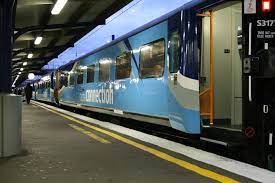
Existing regional and inter-regional passenger trains, currently the Capital Connection train between Wellington and Palmerston North, the Wairarapa Connection train between Wellington and Masterton and Te Huia train between Hamilton and Auckland, as well any new passenger train service/s, under the ‘CityConnect intra/inter-regional passenger rail and coach network’ concept, being 40% of inter-regional ‘tap and travel’ travel, would form the backbone of a national integrated public transport network.
Regional and inter-regional passenger trains, would be modem, quiet, fast, using clean renewable energy, environmentally friendly powered train sets with on board toilet and disable facilities, power points at seat, wifi and some cases an on board Cafe facility.
How will this affect the traveller
The traveller will see more frequent, better co-ordinated services - eg trains that meet buses and in particular more services crossing regional boundaries.
By travelling on a National Public Transport Agency funded urban metro, regional and inter-regional bus, light rail 'tram', passenger train and/or ferry service/s, a traveller will be able to 'tap' and travel from Kaitaia in the North Island to Oban in Stewart Island and most communities in-between.
Electric train services in Wellington and Auckland
The current electrified metro rail networks in Wellington and Auckland, will still be funded by the National Public Transport Agency in association with their respective Public Transport Authority’s.
Long distance buses and passenger train services
These services will not be funded by the National Public Transport Agency, as they are commercial 'book and travel' services, where a passenger will have to make reservation/s and pay directly with the bus and/or train operator they are planning to travel on.
If any commercialised 'book and travel' bus and/or train service operating any route/s, that is providing essential rural community connections, like between Fox Glacier to Wanaka, it would receive funding from the National Public Transport Agency, as these services would be deemed to essential service/s.
For further information concerning the points raised in this discussion concept plan:
- Does New Zealand rail network actually serve New Zealanders?
- Long distance passenger rail services in New Zealand
- New Zealand's shrinking passenger railway network
- Can semi rural towns and small rural communities have public transport?
- It is time to reform rail in Aotearoa New Zealand
- Future of New Zealand's land transport and communities
- CityConnect - the national public transport network
If you support a national public transport network concept, have your say or become proactive by getting involved in local better public transport campaign groups.
The creation of a National Public Transport Strategy is one of the initiatives of the Public Transport Forum New Zealand.